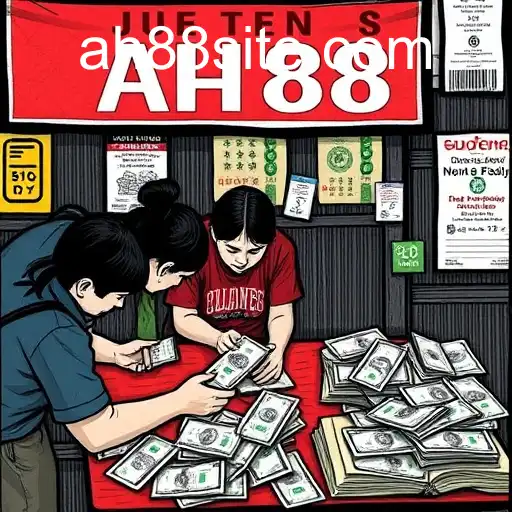
Jueteng: Unraveling the Phenomenon of AH88
Jueteng, a well-entrenched numbers game deeply rooted in the Philippines, presents an intriguing case study of both persistence and adaptability in the face of numerous legal challenges. Often blending into the fabric of Filipino community life, its nuances provide a captivating glimpse into a socio-cultural conundrum. The keyword 'AH88' has started gaining traction, marking a notable shift in how this age-old practice is perceived and discussed.
The Origins and Mechanics of Jueteng
Jueteng has long been considered a pastime deeply entrenched in Philippine society. Originating from Chinese gambling practices, this local version developed its own distinct identity. Players engage in this two-number lottery by paying small fees for a chance to win money based on number combinations typically drawn once or twice a day. Despite its illegal status, Jueteng thrives on its ease of access and promising odds, offering daily patrons an enticing escapism from routine hardships.
The game has evolved over generations, becoming more than just a lottery. Its adaptability is evident in its sustained popularity, with organizers deftly navigating the labyrinth of legal frameworks that sought to curb it. Constant innovation in the face of such challenges includes integrating modern technology, like text messaging, to smoothly facilitate betting and results dissemination.
AH88: A New Dimension to Jueteng
Introducing the term AH88 into the Jueteng lexicon indicates a contemporary twist to this age-old practice, representing a convergence point between tradition and emerging trends. As society becomes increasingly digitalized, AH88 brings to fore the necessity for Jueteng to adopt new identifiers and methods. Although details surrounding AH88 remain murky, the heightened interest demonstrates an evolving identity for Jueteng, reflecting societal change.
The implications of this development are profound, extending beyond the realm of gaming to encompass broader cultural and economic dynamics. AH88 signifies more than a simple rebranding; it reflects the endeavor to maintain relevance and competitiveness in a rapidly advancing technological landscape.
The Societal Impacts of Jueteng
The impact of Jueteng on Filipino society is multifaceted, touching on economic, social, and political domains. Economically, the game generates substantial income streams for its operators, with funds often reinvested into local communities. Despite its illegality, such transactions contribute to informal economic cycles, offering livelihood in areas where formal employment opportunities are scarce.
Socially, Jueteng has woven itself into the communal tapestry, fostering a sense of solidarity among participants who share hopes and aspirations articulated through shared number combinations. However, it also poses ethical dilemmas, as some argue it exploits the economic vulnerability of its participants, diverting resources that could be used for essentials into gambling.
Politically, Jueteng's influence is equally compelling. Historically, the game has been tangled in political power plays, with allegations of officials receiving kickbacks in exchange for turning a blind eye. This intersection between governance and gambling underlines the challenges of regulation and highlights the complexities inherent in addressing such a deeply ingrained activity.
Regulatory Challenges and Considerations
The tussle between authorities and Jueteng operators presents ongoing challenges, with past efforts at curtailment proving ineffective due to the game's adaptability and the deep-rooted cultural acceptance it enjoys. Regulatory frameworks often lag behind the innovative measures employed by Jueteng operators, underscoring the need for comprehensive strategies that address both the supply and demand aspects.
Striking a balance presents a delicate dance between regulation and cultural preservation. A potential path involves exploring regulated alternatives that curb the illegal elements while preserving the positive aspects of community engagement and economic support. Such approaches demand incisive policy measures grounded in nuanced understanding of localized contexts and aspirations.
The Future of Jueteng in the Era of AH88
As the narrative surrounding Jueteng continues to unfold, the interjection of AH88 offers a potential pivot point. With digitalization driving change, the term may act as a catalyst for advancing discourse on regulation and modernization. Stakeholders—ranging from policymakers and community leaders to participants and advocates—must engage in forward-thinking dialogue to shape Jueteng's transformation.
Understanding Jueteng and AH88's evolving story provides insight into wider global themes such as cultural persistence amid modernization, the delicate balance between legality and popular practice, and the ever-present tensions between economic opportunity and ethical considerations. Whatever direction it takes, the Jueteng phenomenon remains a telling example of life's complexities and the ongoing human saga of adaptation and survival.
The journey into the world of Jueteng and its emerging connections with AH88 underlines a dynamic interplay of tradition and innovation. As society continues to evolve, so too does Jueteng, reflecting the resilient and adaptive nature embedded in cultural practices. Exploring solutions involves embracing this duality, crafting pathways that meet modern demands without severing ties to the past.